
About
I am a Senior AI Researcher in the Trustworthy AI research group at J.P. Morgan in London. Previously, I was a postdoctoral researcher at MIT, and completed my Ph.D. at University College Dublin.
My research focuses on making AI systems understandable and useful to the people who work with them. I develop interpretability methods and evaluate whether they help people build accurate mental models, calibrate their reliance on AI, improve models, and make informed decisions. My work spans interpretable reinforcement learning, autonomous driving, scientific discovery, and contrastive explanations for e.g. recourse.
Our recent research, published in Nature, shows that concept-based explanations can improve safety drivers' understanding of self-driving cars and their situational awareness. In collaboration with MIT and Motional, we deployed our technique on experimental autonomous vehicles on the Las Vegas Strip, with evaluations on closed tracks, public roads, and in online simulations. Learn more on the project website.
Recent News
- Sep 2026: Our paper was accepted at NeurIPS! Details below.
- Sep 2026: Our research was published at Nature! Project website is here
- Sep 2026: Our reasearch was featured in MIT News.
- Sep 2026: Our reasearch was featured in Nature News.
- Sep 2026: Our reasearch was featured in Motional News.
- July 2026: Our work was presented at ICML!
- May 2026: Our paper was presented at AISTATS.
- May 2026: I will be area chair at this year's NeurIPS conference.
Selected Publications (from Google Scholar)
Explainable deep learning improves human mental models of self-driving cars
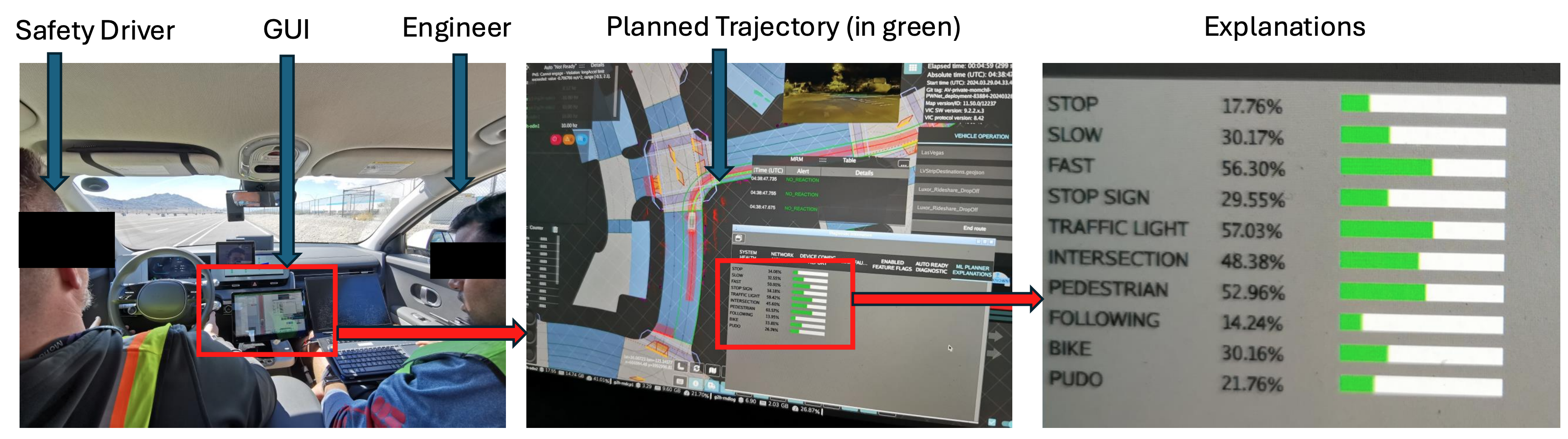
TL;DR: We show that concept-based explanations improve human mental models of self-driving cars, and that this translates into improve ability to predict the AV's future actions and general situational awareness.
Eoin M. Kenny, Akshay Dharmavaram, Sang Uk Lee, Tung Phan-Minh, Shreyas Rajesh, Yunqing Hu, Laura Major, Momchil S Tomov, Julie A. Shah
Beyond Proxy Metrics: MLLM-Based Human Surrogate Evaluation for Explainable AI
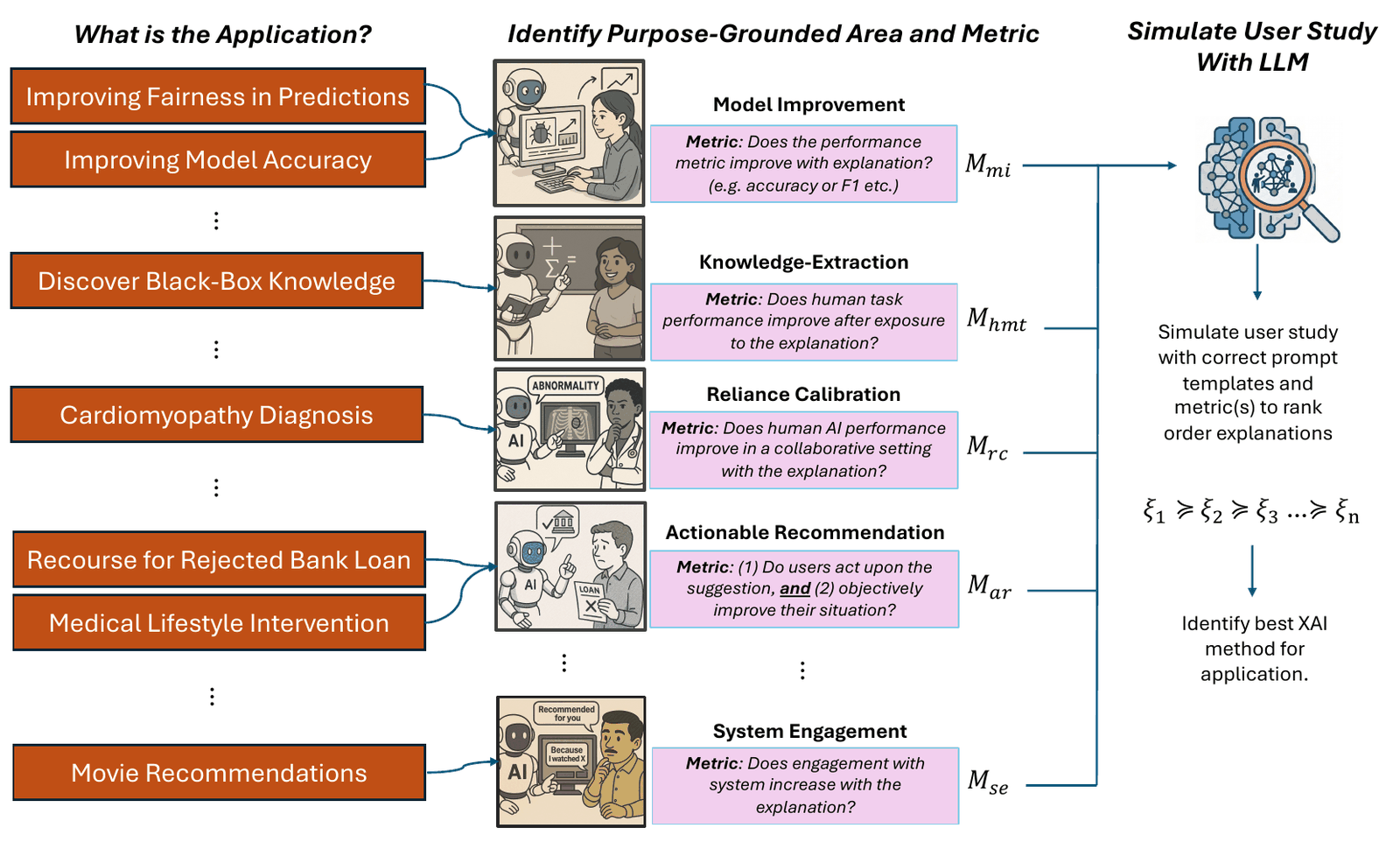
TL;DR: We ask whether multimodal LLMs can stand in for human participants when evaluating XAI, and find that the rank ordering of explanation methods replicates across five purpose-grounded domains, though not uniformly.
Eoin M. Kenny, Salim I. Amoukou, Tom Bewley
NeurIPS 2026 (link coming soon)
CAMP: Coherent Alignment of Multimodal Prototypes for Explainable Complementary Learning
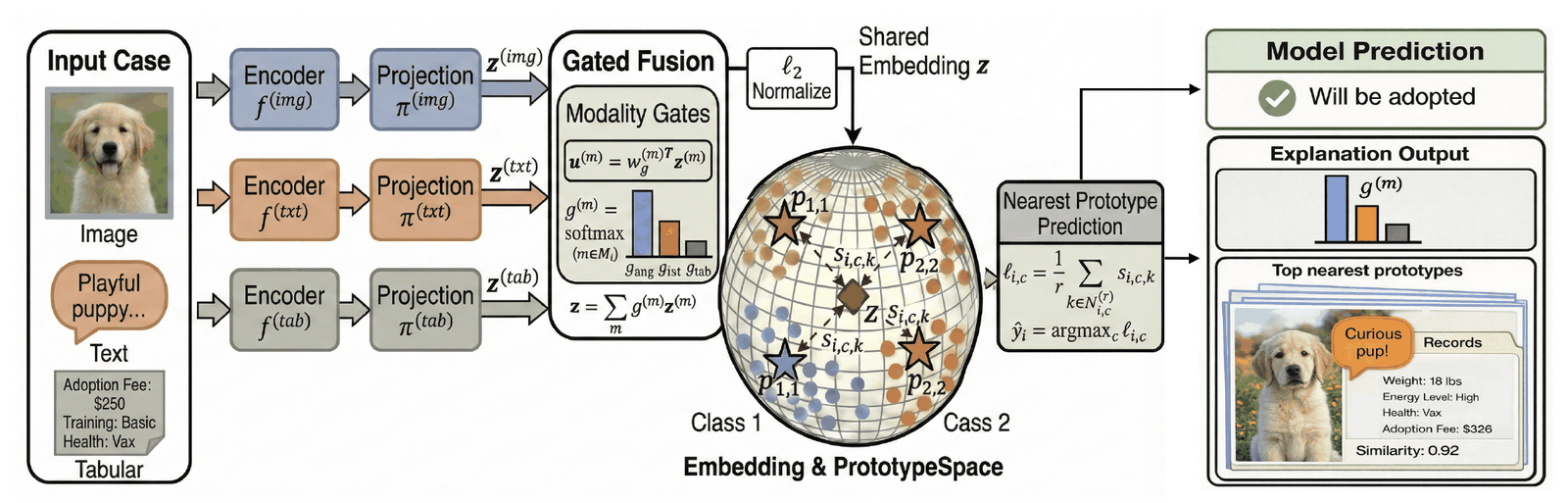
TL;DR: We build the first prototype-based interpretable-by-design framework for multimodal tasks where each modality carries complementary rather than redundant evidence, showing a sub-1M parameter head can rival AutoML systems 100x its size.
Alvaro Lopez Pellicer, Eoin M. Kenny, Simran Lamba, Shubham Sharma, Plamen P Angelov, Saumitra Mishra
An Evaluation of Cost Functions for Algorithmic Recourse
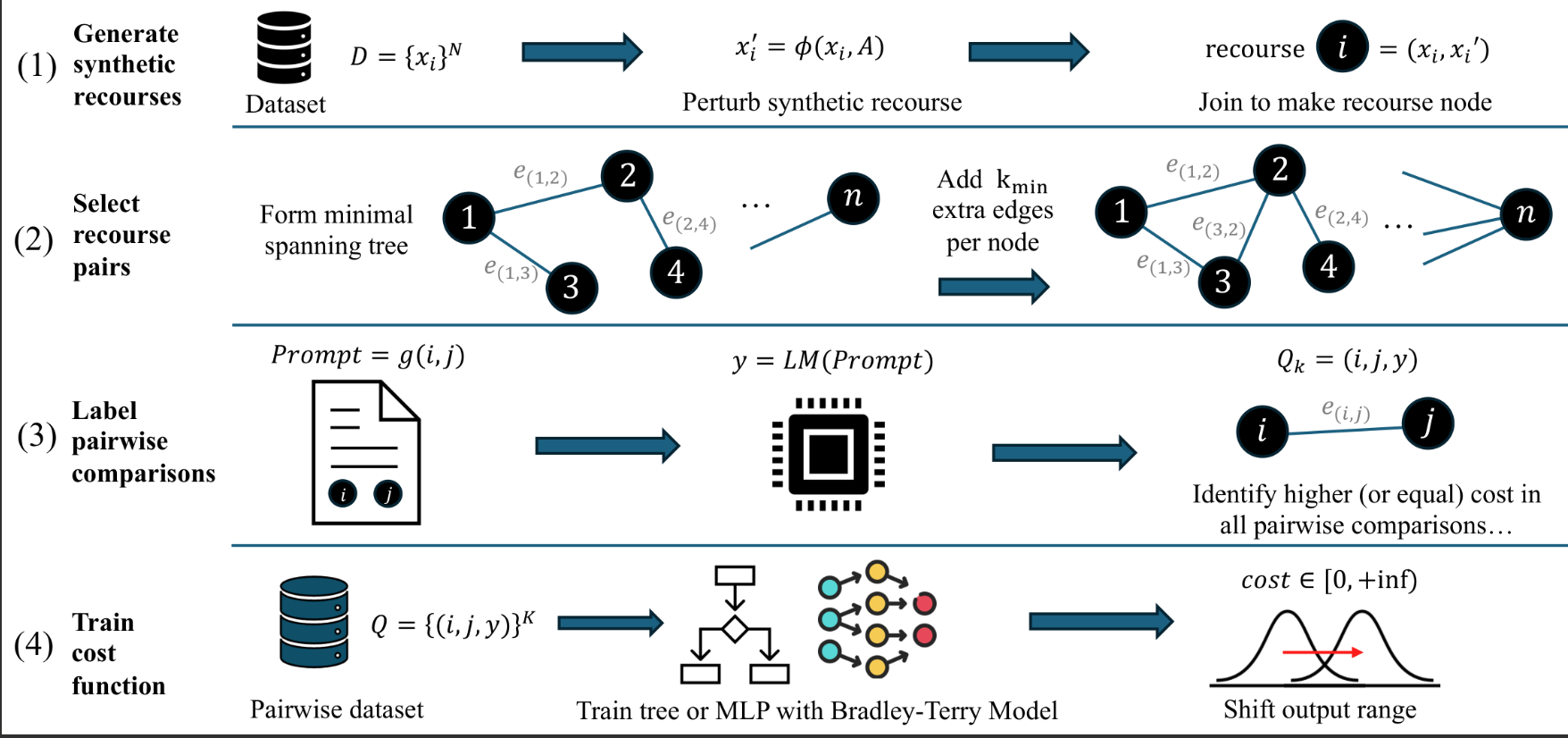
TL;DR: We run the first large-scale benchmark of the cost functions used in algorithmic recourse, and show that Bradley-Terry models are best, but only when scaled up using LLMs as surrogate human labellers.
Eoin M. Kenny, Allan Anzagira, Tom Bewley, Freddy Lecue, Manuela Veloso
A Hybrid Model that Combines Machine Learning and Mechanistic Models for Useful Grass Growth Prediction
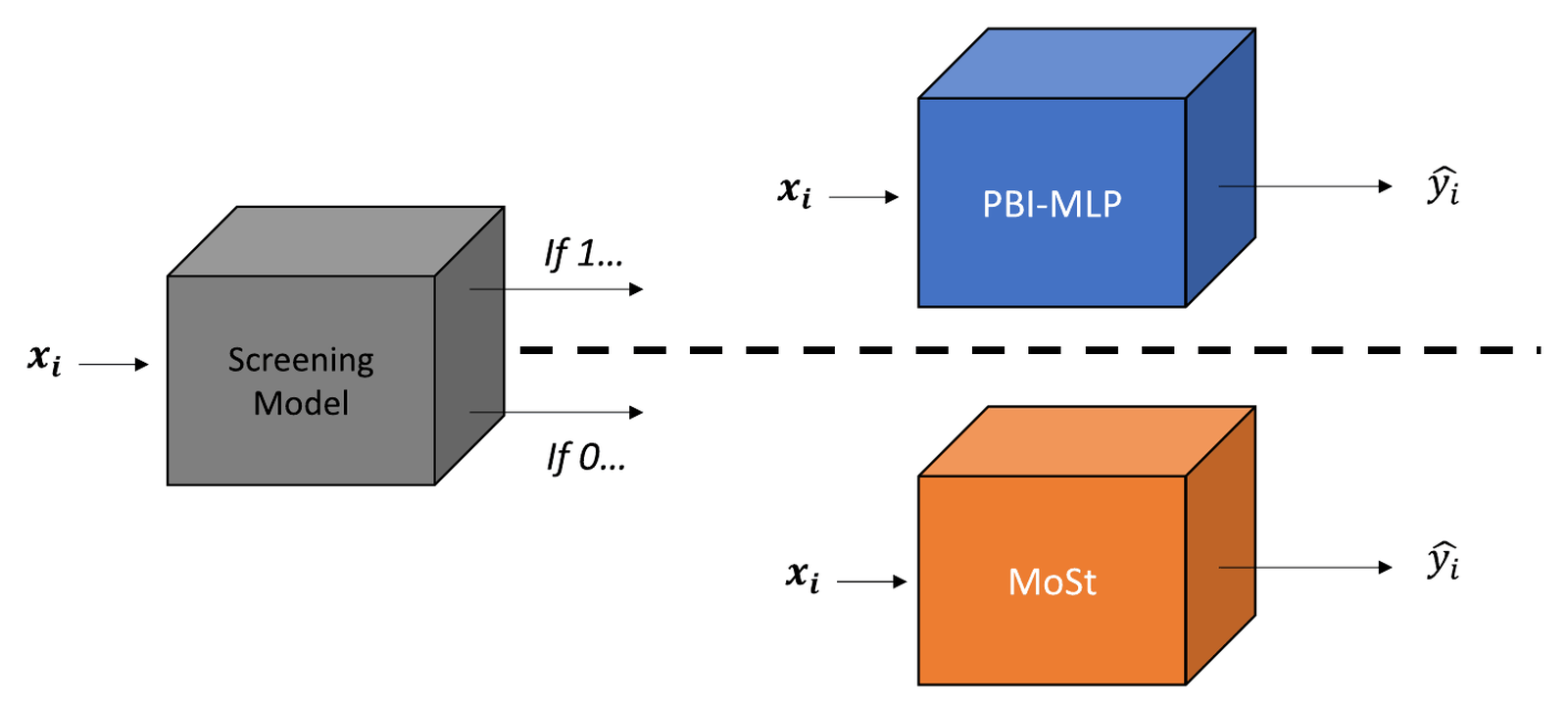
TL;DR: We show mechanistic and machine learning models of grass growth fail in complementary ways, and that a screening model choosing between them instance-by-instance beats either alone, especially under out-of-distribution weather.
Eoin M. Kenny, Elodie Ruelle, Mark T. Keane, Laurence Shalloo
The Utility of "Even if" Semifactual Explanation to Optimize Positive Outcomes
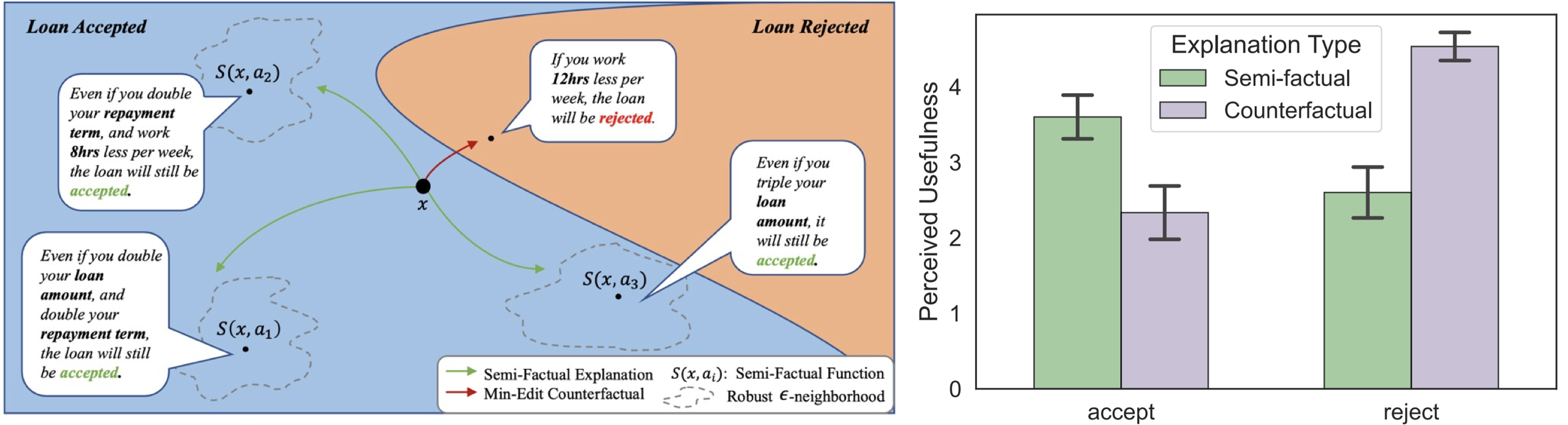
TL;DR: We show that semifactuals are more useful than conterfactuals when a user gets a positive outcome from an AI system.
Eoin M. Kenny, Weipeng Huang
Towards Interpretable Deep Reinforcement Learning with Human-Friendly Prototypes
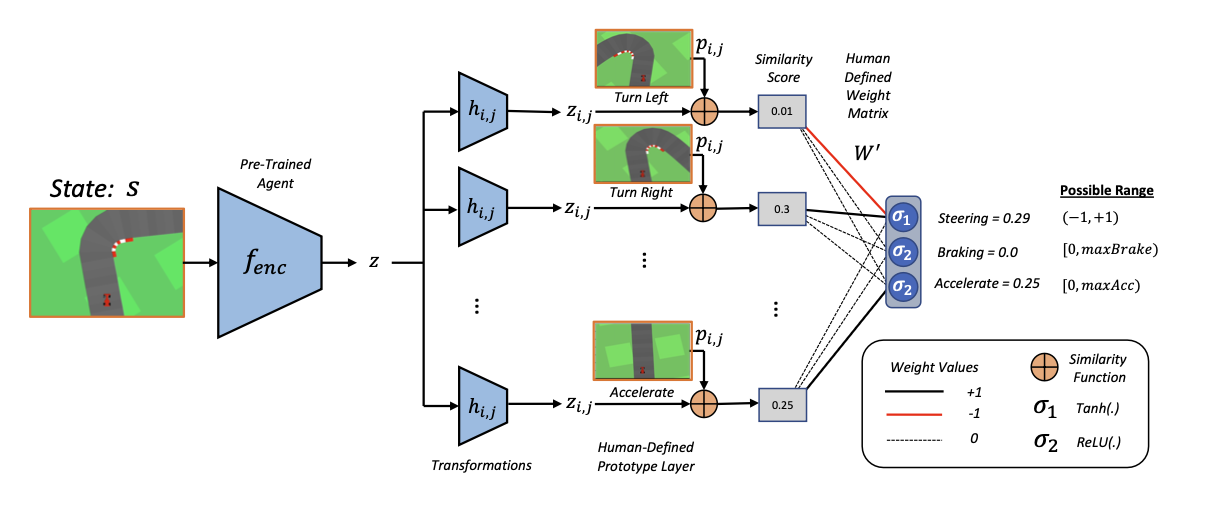
TL;DR: We build the first inherently interpretable, general, well performaning, deep reinforcement learning algorithm.
Eoin M. Kenny, Mycal Tucker, and Julie A. Shah
[ICLR 2023] * Spotlight Presentation (top 25% of accepted papers)
On generating plausible counterfactual and semi-factual explanations for deep learning
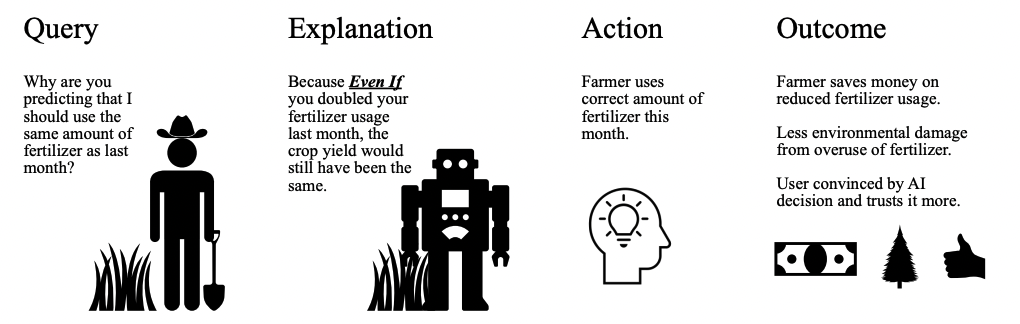
TL;DR: We introduce the AI world to semi-factuals, and show a plausible way to generate them (and counterfactuals) using a framework called PIECE.
Eoin M. Kenny and Mark T. Keane
Bayesian Case-Exclusion and Explainable AI (XAI) for Sustainable Farming
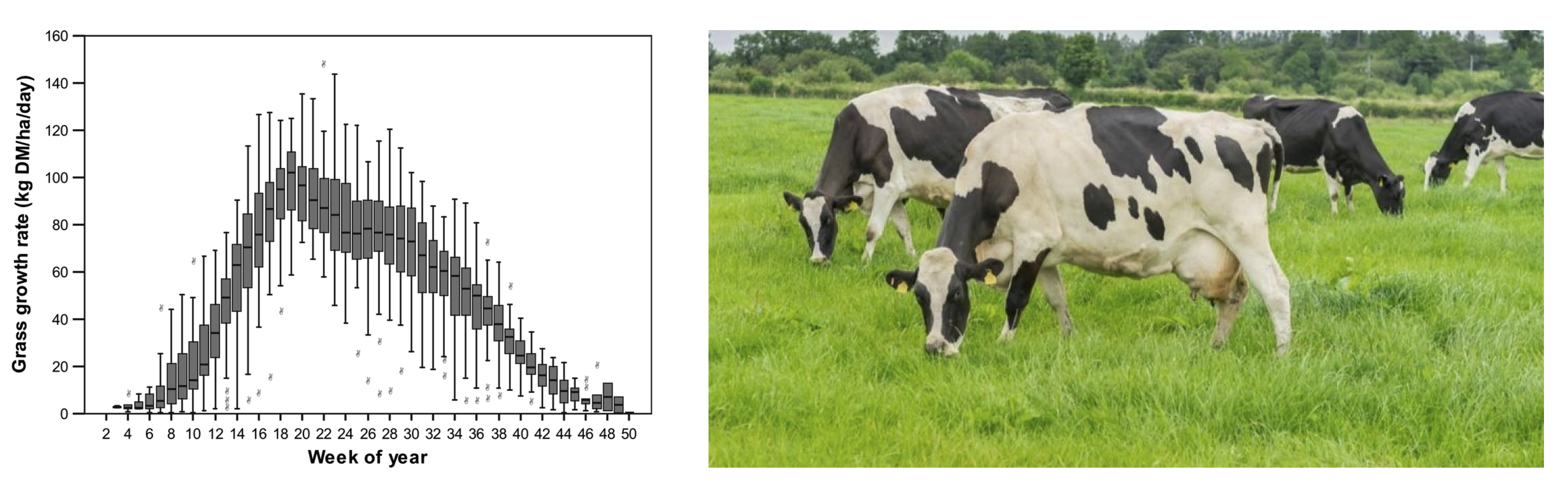
TL;DR: We show how to accuractly predict grass growth and offer "good" explanations to Irish Dairy Farmers.
Eoin M Kenny, Elodie Ruelle, Anne Geoghegan, Mohammed Temraz, Mark T Keane
[IJCAI 2020] Sister Conference Best Paper Track * Best Paper Award at ICCBR 2019.
Explaining black-box classifiers using post-hoc explanations-by-example: The effect of explanations and error-rates in XAI user studies
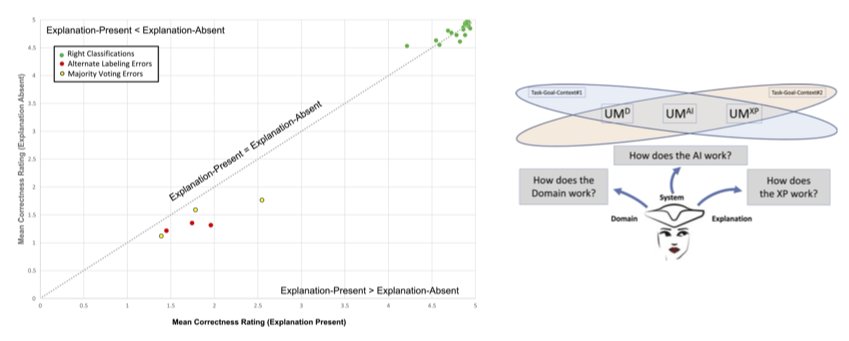
TL;DR: We find that nearest neighbor exemplar-based explanation lead people to view classifiction errors as being “less incorrect”, moreover they do not effect trust.
Eoin M Kenny, Courtney Ford, Molly Quinn, Mark T Keane